Garland's Elden Ring Film: A Fantasy War Epic
Author: Savannah
Jan 23,2026


If you had to choose a director for an Elden Ring movie, who would it be?
You might go with fantasy veterans like Peter Jackson or Guillermo del Toro, or perhaps Miguel Sapochnik, known for directing major battle sequences in *Game of Thrones* such as Hardhome and the Battle of the Bastards. For a more avant-garde approach, directors like Robert Eggers (*Nosferatu*), Yorgos Lanthimos (*Poor Things*), or Bong Joon Ho (*Mickey 17*)—filmmakers who, like FromSoftware, embrace the surreal, cryptic, and uncanny—could be compelling choices.
Alex Garland probably wouldn't be your first pick. The British writer-director is known for grounded, slow-burn sci-fi like *Ex Machina* and *Annihilation*, as well as the war films *Civil War* and *Warfare*—none of which bear an obvious resemblance to FromSoftware's style. Yet, A24 has selected Garland to adapt Hidetaka Miyazaki's masterpiece for the big screen. Since Garland, who will also write the screenplay, is not one to coast on a paycheck, it makes you wonder how he plans to tackle this project.
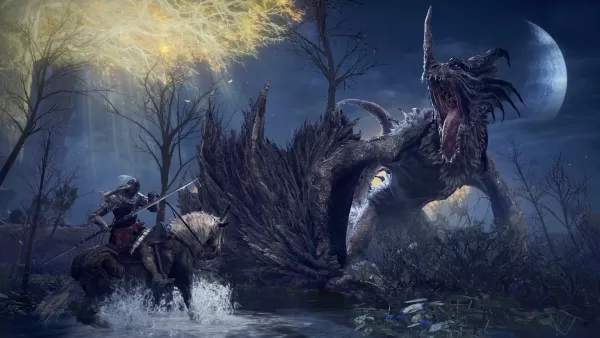
On the surface, Garland and Elden Ring seem an unlikely pair. Despite his sci-fi background, he has never tackled hardcore fantasy—a challenging genre, especially for video game adaptations. His narrative style also differs from FromSoftware's. *Ex Machina* and *Annihilation* rely on plot, dialogue, and character, whereas Dark Souls, Bloodborne, and Elden Ring tell stories indirectly through item descriptions and environmental design. (*Civil War*, set in a near-future America, was criticized for its lack of detailed backstory).
But just because Garland hasn't made a fantasy film doesn't mean he can't. He has reinvented himself before—*Civil War* and *Warfare* are starkly different from his earlier work—so who's to say he won't do it again?
In fact, making an Elden Ring movie wouldn't be entirely new territory for Garland. Many may not know he is an avid gamer. Playing *Resident Evil* reportedly inspired his script for *28 Days Later*, and *The Beach*—based on his novel—features a scene that one critic called the closest we'll get to a *Banjo-Kazooie* movie starring Leonardo DiCaprio.
*Warfare* evokes surprisingly similar feelings to playing Elden Ring: being outnumbered, outmatched, overwhelmed, and fearing for your life (or runes).
While some directors feign interest in source material to please fans, Garland's appreciation for *The Last of Us*, *BioShock*, and especially *Dark Souls* appears genuine. He seems to understand what sets these games apart. In a 2020 interview, he described Dark Souls as having "embedded poetry," where encounters with broken souls outside doorways feel like drifting into an "existential dream."
Leaning into this "existential dream," Garland could style his Elden Ring adaptation after *Annihilation*, praised for its psychedelic visuals. Alternatively, a more unexpected but effective approach would be to model it after *Warfare*, his intense thriller about Navy SEALs in Iraq. I suggest this not because *Warfare* is fantastical—it's touted as hyper-realistic—but because it evokes the same visceral tension as Elden Ring: feeling outnumbered, outmatched, and overwhelmed, constantly fearing for your survival.
Replace the war-torn streets of Ramadi with the ruins of Limgrave, the alleys of Leyndell, or the badlands of Caelid, and you have a film that adapts not the epic lore of Marika and the Demigods, but the minute-by-minute struggle of a Tarnished navigating the Lands Between—so consumed by surviving to the next Site of Grace that the grand quest to become Elden Lord fades into the background.
With reports suggesting Garland wants to cast *Warfare* actor Kit Connor in the lead, his Elden Ring film may adopt a similarly suspenseful tone and revisit themes of fear, despair, and senseless violence that Connor has already shown he can portray. Using *Warfare* as a template would leverage Garland's strength in exploring psychology through visceral, choreographed action. It would also follow the example of HBO's *The Last of Us*—arguably the most successful video game adaptation—whose quality stemmed from the creators' deep understanding of what made the original game great.
Elden Ring, like other FromSoftware titles, is not a power fantasy where heroes defeat giant monsters in flashy cutscenes. It is an anti-power fantasy where players embody nameless warriors who become intimately familiar with death, repeatedly facing daunting challenges until they prevail. For Garland's adaptation to succeed, capturing that bittersweet essence is crucial. His work on *Warfare* offers a glimpse of what we might see when Elden Ring finally hits the big screen.