SAG-AFTRA Ends Video Game Actor Strike After Nearly a Year
Author: Skylar
Jan 05,2026


It's official — the video game voice actor and performer strike has concluded.
The Screen Actors Guild - American Federation of Television and Radio Artists (SAG-AFTRA) confirmed it reached a tentative agreement on the interactive media contract this week, potentially ending nearly a year of labor strikes across the video game industry. SAG-AFTRA has now formally suspended the strike action as of noon PT on June 11.
The SAG-AFTRA strike against video game companies began in July 2024 after negotiations between the union and major studios—including Activision, Blindlight, Disney Character Voices, Electronic Arts, Epic Games, Formosa Interactive, Insomniac Games, Take 2 Productions, and WB Games—broke down over AI protections. Over 98% of union members later voted to authorize the strike.
While the union has not yet finalized the deal—a special meeting is scheduled for today, June 12, to review the agreement—if approved, the contract will be sent to the full membership for a ratification vote.
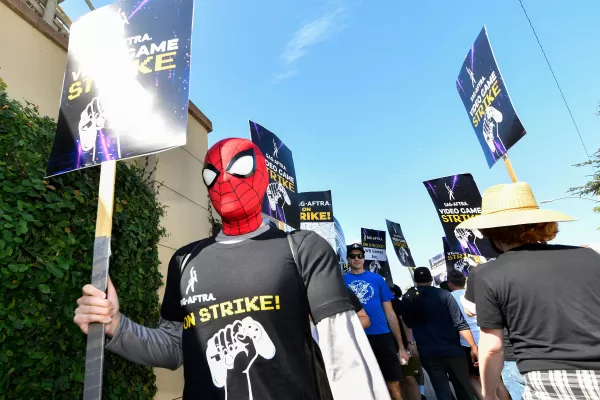
This development means video game performers can resume work, and players should see less disruption to their favorite games. Gamers had noted that several ongoing titles, such as Destiny 2 and World of Warcraft, featured unvoiced NPCs in scenes that typically include dialogue, likely a result of the strike. Late last year, SAG-AFTRA also called a strike against League of Legends after Riot Games allegedly attempted to circumvent the labor action by canceling a project. Activision confirmed it recast characters in Call of Duty: Black Ops 6 following player feedback about new voice talent, and Epic Games faces an unfair labor charge after SAG-AFTRA filed a complaint with the National Labor Relations Board over the company's use of an AI-voiced Darth Vader character in Fortnite.
To understand why this strike was necessary, consider the experience of Horizon actor Ashly Burch. In a since-deleted video, Sony Interactive Entertainment director of software engineering Sharwin Raghoebardajal demonstrated a conversation with an AI-powered version of Aloy, using voice prompts and AI-generated speech and facial animations.
The voice emanating from the AI Aloy was clearly synthetic, resembling a robotic text-to-speech generator, not Burch's own performance. The character's facial movements appeared stiff, and her eyes lacked expressiveness during the exchange with Raghoebardajal.
“You must obtain our consent before creating an AI version of us in any form, compensate us fairly, and disclose how you intend to use this digital replica,” Burch stated at the time. “I am deeply passionate about this industry and the art of performance. I want to ensure there is a future for the next generation of actors, for more incredible game performances, and for my own ability to continue this work. If we do not succeed in these negotiations, that future is seriously at risk."