Hideo Kojima Leaves USB Stick of Ideas for Staff, 'Like a Will'
Author: Eric
May 08,2026


Hot on the heels of revealing several discarded video game concepts—including a “Forgetting Game” where the protagonist slowly loses memories and abilities after extended breaks—Kojima has disclosed that he left his team a USB drive filled with game ideas to be used after his death.
As reported by VGC, Kojima shared this somber insight with Edge magazine, reflecting on how his perspective shifted during the pandemic.
“Turning 60 wasn’t as pivotal as my experiences during the pandemic,” he said. “I became seriously ill and underwent eye surgery. Until then, I never thought of myself as old—I didn’t feel my age and assumed I’d keep creating for as long as I lived. But when I fell ill and couldn’t work, and saw so many people around me pass away, death became real. I recovered, but now I ask myself: How many years do I have left to make a game or a film? Maybe ten?”
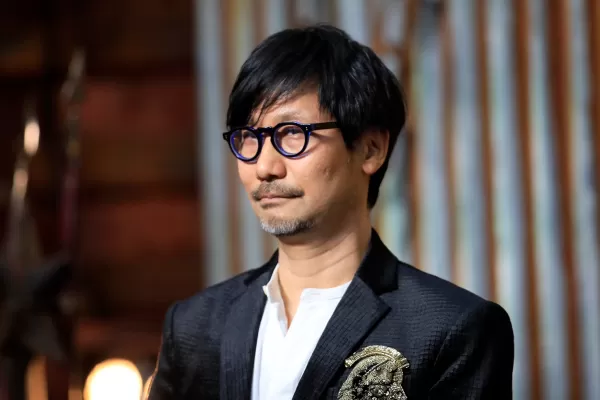
 Kojima has been thinking about what happens once he's gone. Photo by John Phillips/Getty Images for Warner Bros. Pictures.This reevaluation didn’t just inspire new projects—it led him to create a USB stick “like a will,” meant to help sustain Kojima Productions after he’s gone.
“I gave a USB drive with all my ideas to my personal assistant—sort of like a will,” he said. “Maybe they could keep making things at Kojima Productions after I’m gone… That’s my fear: What becomes of Kojima Productions when I’m no longer here? I don’t want them to just manage our existing IP.”
This week, IGN covered Kojima’s thoughts on integrating real-time passage into games. Beyond discussing time-based mechanics from his past titles, he unveiled unimplemented concepts, including one scrapped from the upcoming Death Stranding 2: On The Beach.
“I’ve considered having characters’ hair grow in games,” Kojima said in the latest episode of his Japanese radio podcast KOJI10. “Originally in Death Stranding 2, I planned for Sam’s beard to grow over time, requiring the player to shave it. If they didn’t, Sam would look unkempt. But since Norman Reedus is a major star, I didn’t want him to look uncool.” Still, he said he might explore this in a future title.Kojima also shared three game concepts centered on real-time aging. The first is a life simulation: “The player begins as a newborn, grows into a child, then becomes an adult. In the game, you battle enemies. Like in MGS3’s The End, the longer you play, the older your character gets—eventually becoming 70 or 80. At that age, you’re weaker, your vision fades. As a teen, you run faster; by 60, you move slower,” he explained, noting that younger characters are physically stronger while older ones gain wisdom and experience. This would reshape how players strategize against foes. “But no one would buy it!” he added—though others on the podcast expressed excitement for such a “Kojima-style” game.
Another idea involves crafting something that matures over time—like wine or cheese—requiring players to return regularly over long periods, functioning as a background or idle experience.
 New duel
 1ST
1ST 2ND
2ND 3RDSee your ResultsFinish playing for your personal results or see the community’s!Continue playingSee results
Finally, Kojima proposed a “forgetting game” where players must play frequently. In this concept, if you take too long a break, your character begins forgetting vital skills and knowledge—like how to shoot a gun or remember their job. The memory loss accumulates until the player can no longer move. “You’d need to take a week off work or school to play it,” Kojima joked.
It’s an incredibly busy period for Kojima and his studio, Kojima Productions (now we understand why). Alongside Death Stranding 2, he’s developing a live-action Death Stranding film with A24, the studio behind Everything Everywhere All At Once. He’s also working on OD for Xbox Game Studios and the video game-film hybrid Physint for Sony.
No release dates have been announced for OD or Physint. In January, Kojima confirmed the ongoing video game actors strike has impacted production on both projects, so it may be a while before we see or hear more.