Switch 2 Review | Good? Bad? Worth It?
Author: Violet
Oct 01,2026


 The Nintendo Switch 2 is here—but is it a meaningful upgrade over the original Switch? What sets them apart? How do your favorite Switch games perform on this new model? Find out the answers here.
 It’s been two weeks since the Nintendo Switch 2 launched, and following a console that redefined a generation is no small feat. The original Switch wasn’t just popular—it became a cultural phenomenon, pioneering the hybrid gaming concept so successfully that rivals rushed to copy it. It seamlessly blended home and handheld play, letting you pick up your game on the couch and continue it on the subway without skipping a beat.
Rumors about its successor ran wild from day one. Some predicted a second screen, inspired by the Nintendo DS. Others imagined a detachable handheld unit powered by a full console dock.
The truth? The Switch 2 stays true to its roots while delivering meaningful improvements. Are the grips more comfortable? Have they finally solved the Joy-Con drift issue? Do older Switch games run smoother? We’ve spent over a week testing it—charging it, dropping it (gently, on the bed), and using it in every mode: handheld, docked, and everywhere in between—to see how it truly stacks up.
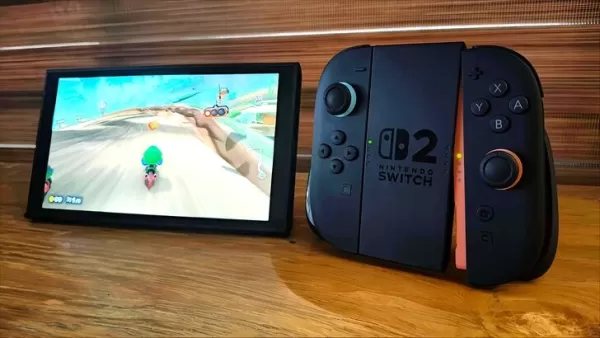
 ⚫︎ Note: The Switch (bottom right) is using third-party Joy-Cons.
At first glance, the Nintendo Switch 2 looks unmistakably like a Switch—same shape, same button layout. But the moment you hold it, you feel the difference. Its matte finish feels smoother, more premium, and the device is noticeably heavier.
Compared to past Nintendo handhelds, the Switch 2 is a powerhouse. The New 3DS XL, for example, weighed around 336 grams (0.74 lbs)—light enough to carry all day. The Switch 2, with its Joy-Con 2 controllers attached, tips the scale at 534 grams (1.18 lbs).
Even when compared to the Wii U GamePad—once criticized for being bulky at 491 grams (1.08 lbs)—the Switch 2 holds its own. That’s because the GamePad was an accessory, not a standalone device. The Switch 2 packs more power into a slimmer, more portable frame.
The original Switch weighed about 398 grams (0.88 lbs) with Joy-Cons attached. The Switch 2 is noticeably larger—nearly half an inch taller and over an inch wider. It feels more substantial in hand, but still lighter than rivals like the Steam Deck.
 Contrary to early assumptions, the Switch 2 is surprisingly pleasant to hold. Its smooth, matte body fits comfortably in your palms. The added weight gives it a solid, grounded feel—unlike the lightweight, plasticky sensation of the original.
Good riddance to the flimsy original kickstand. The new version is wider and U-shaped, sturdy enough for tabletop play without fear of breaking. The port layout has also been improved, now featuring dual USB-C ports—one on top, one on the bottom—making it far more convenient, especially when using the kickstand. The redesigned dock now includes Ethernet and better cooling.
 While the original Switch was portable, it didn’t fit easily into standard pockets—unless you had unusually large ones. The Switch 2, being even bulkier, continues this trend. Detaching the Joy-Cons doesn’t make it any more pocketable. It’s still too large for small bags or compartments.
This is before you even add a protective or travel case—which will only add more bulk. The unit itself is surprisingly durable (JerryRigsEverything tested it by slamming the screen dozens of times before it cracked), but why risk your $450 console? You won’t be slipping it into your jeans anyway, but with a case, you can toss it in your backpack without worrying about scratches from keys or coins.
Nintendo includes a thin protective film on the screen—but it’s prone to scratches. Since Nintendo advises against removing it, we recommend applying a proper tempered-glass screen protector right away. Better to be safe than sorry, especially when carrying a substantial handheld device around town.