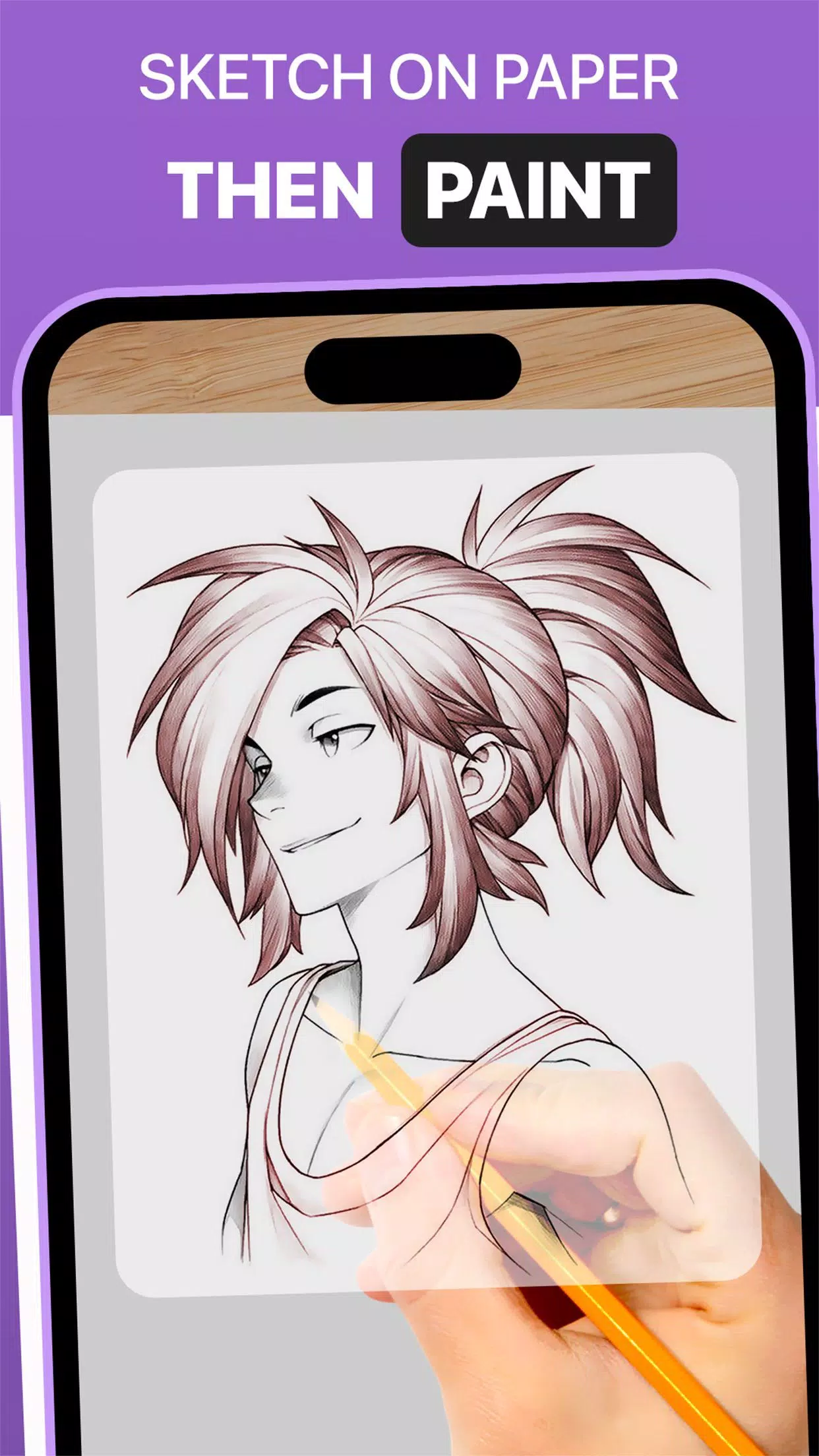


DrawingARアプリを使用して、デバイスの画面上で直接画像をトレースし、紙に正確に再現します。
拡張現実(AR)技術を活用したDrawingARは、選択した画像を紙などの物理的な表面に投影し、画面に表示されるトレース線をなぞりながら描画できます。これにより、アーティスト、学習者、趣味の人々にとって完璧な、シームレスなガイド付き描画体験が実現します。
簡単描画機能では、デバイスギャラリーから画像をインポートしたり、カメラを使用して新しい画像を撮影したりできます。読み込んだ画像は画面上に透明なオーバーレイとして表示され、スケッチや写真を紙に直接トレースするのに最適で、迅速かつ正確な描画に役立ちます。
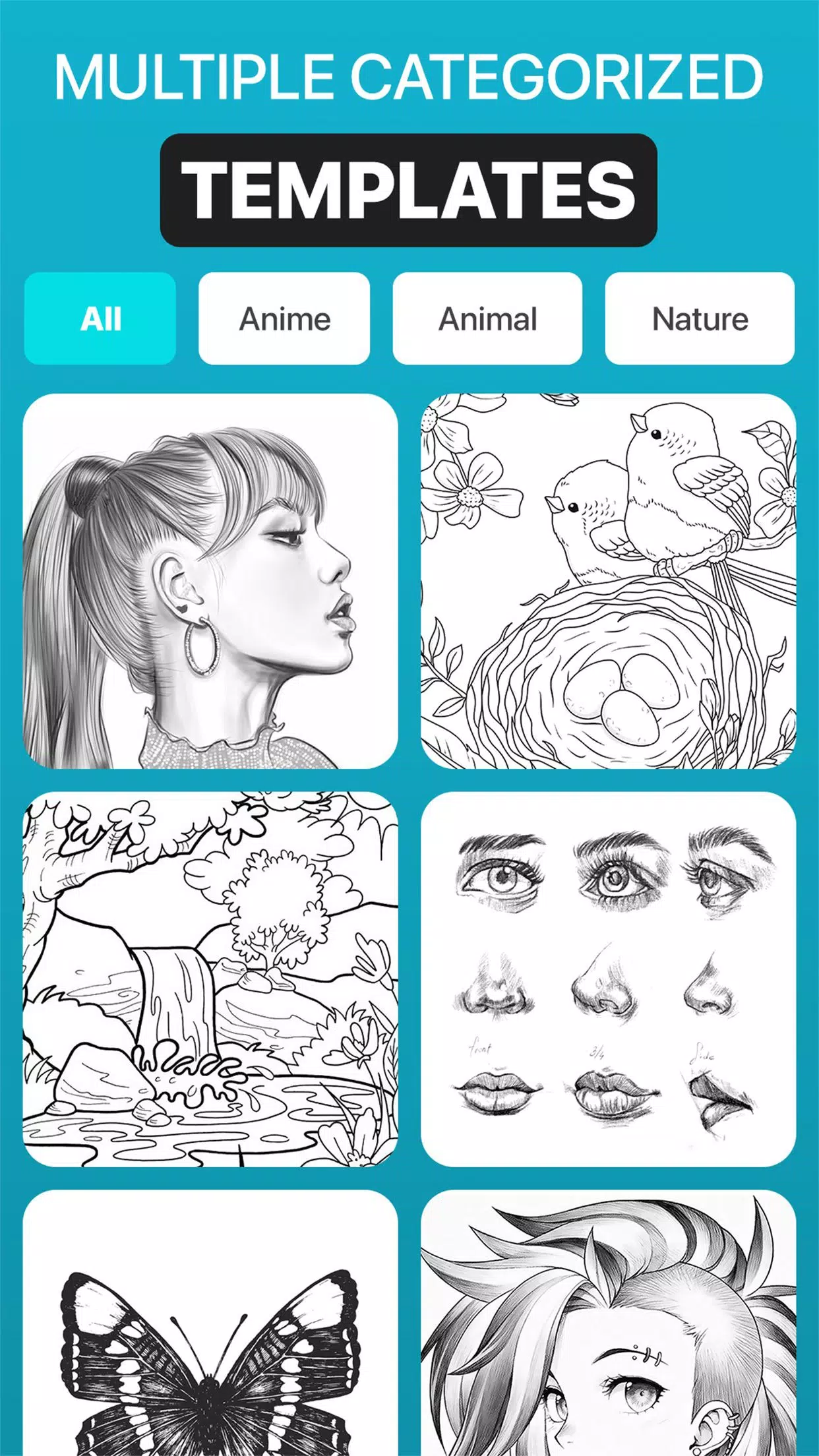
このSketch ARアプリには、動物、漫画、食べ物、鳥、木、ランゴリなど、さまざまなカテゴリーにわたる幅広いプリロード画像が含まれており、無限の創造的可能性を提供します。
「なんでもトレース」機能は、画像の透明度調整、ズームコントロール、柔軟な画像選択など、トレース体験を向上させる便利なツールを提供します。トレース後には、トレーシングペーパーやスケッチパッドでお好みの媒体を使用して、作品に色を付けたりペイントしたりしてさらにカスタマイズできます。
➤ AR描画アプリの主な機能:
1. 画像インポート:デバイスのフォトライブラリから画像やスケッチを簡単にインポートしたり、内蔵カメラで新しい写真を撮影したりできます。これらのビジュアルを紙に正確にトレースするための参照として使用します。
2. 画像オーバーレイ:インポート後、アプリは調整可能な透明度で画像を画面にオーバーレイします。これにより、元の画像と紙を同時に見ることができ、トレース時の精度が向上します。透明度は最適な視認性のためにカスタマイズ可能です。
3. 内蔵ブラウザ:アプリ内の統合ブラウザで、スケッチや画像を検索、プレビュー、直接インポートできます。アプリを切り替えたり、外部からファイルをダウンロードしたりする必要はありません。簡単なスケッチや複雑な描画を即座に見つけられます。
4. 透明度調整:オーバーレイ画像の透明度をトレースのニーズに合わせて微調整できます。薄い輪郭や大胆なガイドが必要な場合でも、この機能で完全に制御できます。
5. ビデオまたは画像の記録:アプリには、描画プロセスをリアルタイムでキャプチャするための専用録画ボタンが含まれています。作品のタイムラプスビデオも作成できます。すべての録画はデバイスの「Drawing AR」フォルダに自動的に保存され、簡単にアクセスできます。
6. トレースした描画のキャプチャ:アプリ内で完成したトレース作品の写真を直接撮影できます。これらの画像はデバイスのギャラリーに保存され、いつでも共有や進捗確認が可能です。
7. シンプルな描画UI:クリーンで直感的なインターフェースで設計されたこのSketch ARアプリは、初心者でもスムーズなナビゲーションと簡単な使用を保証します。すべてのトレース要素は管理しやすく、創造性に集中できます。
➤ AR描画アプリの使用方法:
1. モバイルデバイスにDrawingARアプリをダウンロードして起動します。
2. ギャラリーまたはアプリ内ブラウザからトレースしたい画像を選択またはインポートします。
3. 紙またはスケッチパッドを平らで明るい表面に置きます。
4. 画面上の画像オーバーレイを調整し、紙の上に正しく配置します。
5. 画面上のガイドに従って紙に画像をトレースし、すべての詳細を正確に捉えます。
DrawingARアプリは、アーティスト、デザイナー、教育者、描画に情熱を注ぐすべての人にとって強力で多用途なツールです。[ttpp] と [yyxx] を使用して、あらゆる表面をインタラクティブなキャンバスに変え、デジタルな精度と伝統的な芸術性を融合させます。
AR Drawing: Trace & Sketch のスクリーンショット

コメントを投稿する
-
1、レート
-
2、コメント
-
3、名前
-
4、Eメール
The phrase "What It Means" is often used as a title or theme to explore deeper understanding, significance, or interpretation of a situation, concept, experience, or identity. In the context of "What It Means" as a standalone phrase — especially in relation to SVP, which could stand for "Senior Vice President", "Sustainable Value Proposition", or even a reference to a person or brand — the meaning depends heavily on context.
Here are a few possible interpretations:
1. If "SVP" = Senior Vice President (Corporate Leadership)
"What It Means" could refer to:
The responsibilities and influence of a Senior Vice President in an organization.
The weight of leadership, decision-making, and accountability at that level.
A reflection on what it truly means to hold such a high-ranking position — not just the title, but the impact, pressure, and ethical considerations.
👉 Example:
"What It Means to Be an SVP: More Than a Title — It’s About Legacy, Trust, and Strategy."
2. If "SVP" = Sustainable Value Proposition (Business/Strategy)
"What It Means" might explore:
How a company creates long-term value while being environmentally and socially responsible.
The shift from profit-only thinking to holistic sustainability.
The deeper implications of building a business model that benefits people, planet, and profit.
👉 Example:
"What It Means to Have a Sustainable Value Proposition in 2024."
3. If "SVP" is a Person or Brand (e.g., a Music Artist, Podcast, or Movement)
"What It Means" could be:
The name of a song, album, or series exploring identity, purpose, or personal journey.
A reflection on values, culture, or personal growth.
👉 Example:
An artist named SVP releases a project titled "What It Means" — a soulful exploration of fatherhood, legacy, and mental health.
4. Philosophical or Existential Interpretation
"What It Means" might simply be a meditation on:
Purpose in life
The meaning of success, power, or identity
How people define their own value
👉 Example:
"In a world obsessed with titles and rankings, what does it really mean to matter?"
Final Thought:
"What It Means" is a powerful phrase that invites introspection. When paired with SVP, it likely challenges us to look beyond the surface — whether that's a job title, a business model, or a personal journey — and ask:
"What is the deeper significance? Who are we serving? What values are we upholding?"
If you have a specific context (e.g., a company, song, book, or speech), I’d be happy to help unpack it further.