


Description de l'application
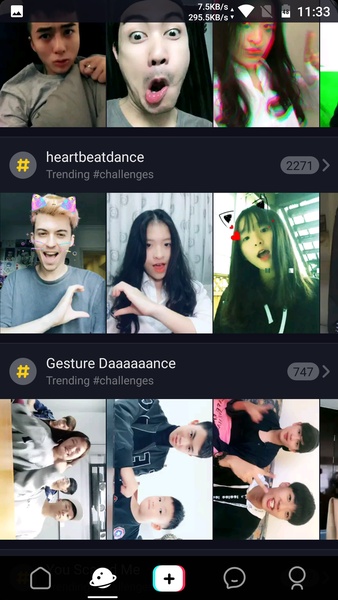
TikTok (Asia) est un réseau social où vous pouvez créer et partager des vidéos musicales amusantes avec vos amis et vos abonnés. La création de compte est rapide et facile, ne prenant que quelques secondes via la connexion Instagram, Facebook ou Google.
TikTok propose de nombreuses options de création vidéo. Choisissez parmi des centaines de milliers de chansons et utilisez divers outils de personnalisation, notamment des autocollants virtuels, des filtres et des fonctionnalités de contrôle du temps (pour des effets de mouvement rapide ou lent).
Créer des vidéos est agréable, mais explorer le contenu d'autres utilisateurs est tout aussi amusant. Comme sur les autres réseaux sociaux, vous pouvez aimer, commenter et partager des vidéos avec vos amis. TikTok (Asia) est un réseau social amusant et potentiellement puissant, offrant un accès instantané à d'innombrables vidéos divertissantes et à une communauté grandissante pour partager vos créations.
Exigences (dernière version)
Android 5.0 ou supérieur requis.
TikTok Captures d'écran



Commentaires
Poster des commentaires
Jeux tendance
Applications tendance











Les sujets
Plus
Outils de productivité les mieux notés pour augmenter votre flux de travail
Jeux de puzzle pliant pour Android
Meilleures applications de productivité pour booster votre efficacité
Jeux de puzzle hors ligne pour jouer à tout moment
Meilleurs jeux de casino en ligne
Explorez le monde des jeux d'arcade
Applications de beauté: votre guide des regards superbes
Autres applications essentielles pour votre téléphone
Derniers articles
Plus