Le Switch 2 de Nintendo est enfin là, marquant un autre chapitre de l'histoire de 40 ans et plus de matériel de jeu de la société. Bien que les impressions initiales suggèrent une approche prudente, nous sommes impatients de voir ce que Nintendo a en magasin. Cet article plonge dans les détails de la bande-annonce de Switch 2, mais d'abord, révisitons l'héritage de la console de Nintendo.
Au fil des décennies, Nintendo a publié huit consoles de maisons (NES, SNES, Nintendo 64, GameCube, Wii, Wii U et Switch) et cinq ordinateurs de main (Game Boy, Game Boy Color, Game Boy Advance, DS et 3DS). Les classements est un défi, nécessitant une considération à la fois de l'innovation matérielle et de la qualité de leurs bibliothèques de jeux. Voici un classement possible:
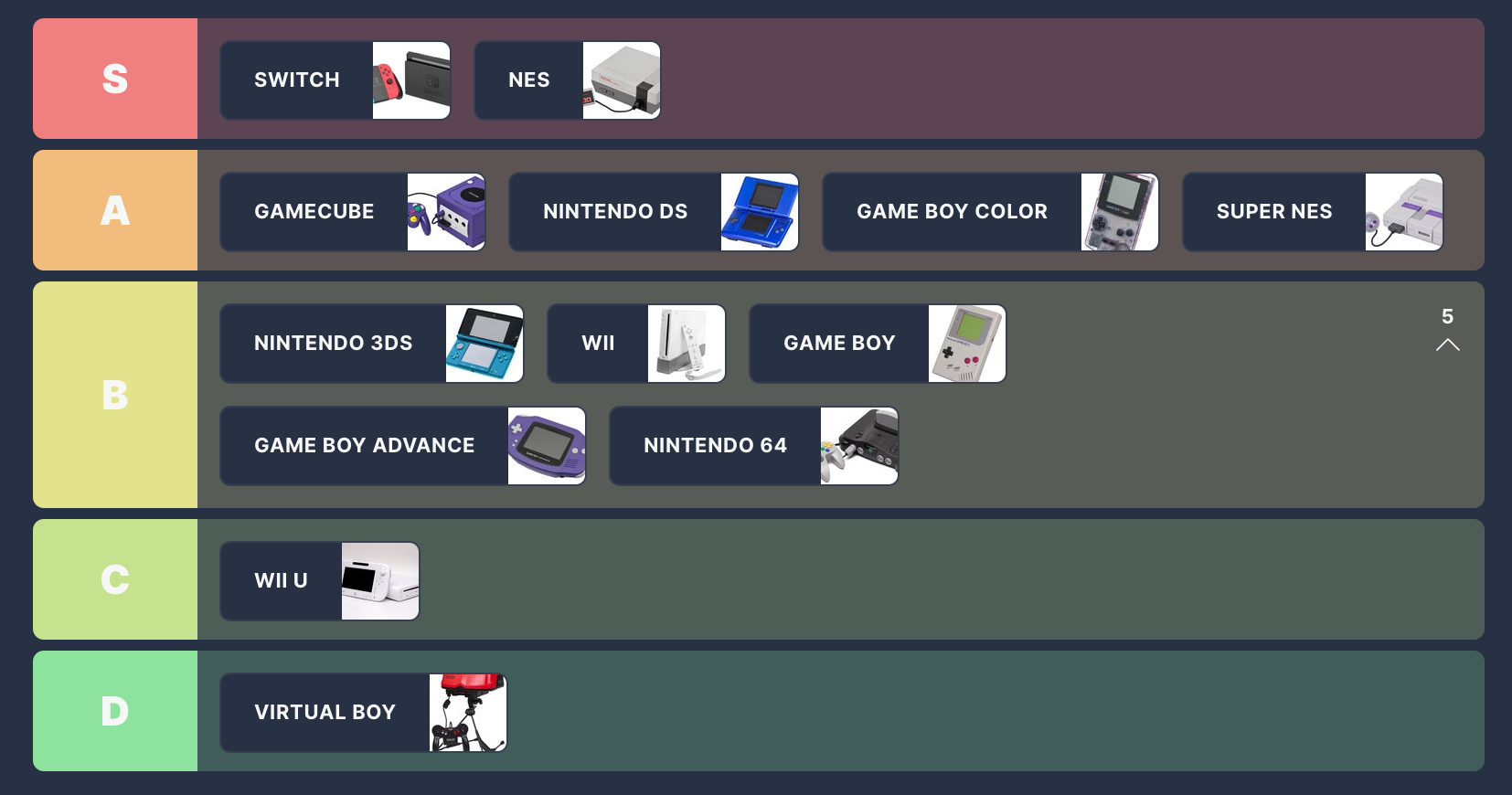
Mon niveau S personnel comprend le NES, alimenté par des souvenirs nostalgiques de classiques comme Super Mario Bros. et Mega Man 2. Le Switch gagne également un classement S-Tier en raison de sa conception hybride innovante et de sa bibliothèque de jeux stellaires, mettant en vedette des titres comme La légende de Zelda: larmes du royaume et Super Mario Odyssey .
N'hésitez pas à être en désaccord! Créez votre propre liste de niveau Nintendo Console et comparez-la avec la communauté IGN.
Consoles Nintendo
Consoles Nintendo
Avec seulement une bande-annonce de deux minutes révélée jusqu'à présent, le classement ultime du Switch 2 reste à voir. Partagez vos prédictions et raisonnement dans les commentaires ci-dessous!

The phrase "What It Means" — particularly when used in a title like "What It Means" — often serves as a thematic or introspective prompt, inviting reflection on personal, emotional, social, or philosophical significance. Without more context (such as a song, book, movie, or speech), here’s a general interpretation of what "What It Means" could represent:
1. Personal Identity & Growth
It might explore what certain life experiences, choices, or relationships truly signify. For example:
"What it means to be a parent."
"What it means to forgive."
"What it means to find yourself."
These questions point toward introspection and emotional maturity.
2. Emotional Depth in Art
In music or film, "What It Means" often refers to the emotional core of a story or lyric. For instance:
A song might reflect on love, loss, or longing, asking the listener to consider the deeper truth behind the words.
A film might examine how characters interpret events, revealing that meaning isn’t always obvious.
3. Social or Existential Meaning
It may also touch on larger questions:
What does it mean to live a meaningful life?
What does it mean to belong in a changing world?
What does it mean to stand up for justice?
These are common themes in literature, philosophy, and modern culture.
4. Cultural or Historical Context
In some cases, "What It Means" could be tied to a specific movement, event, or cultural shift — for example:
"What It Means to Be Black in America Today"
"What It Means to Be a Refugee"
"What It Means to Survive"
These help people connect emotionally with broader truths.
💡 In short:
"What It Means" is a powerful prompt that encourages us to look beyond surface-level understanding and ask:
"Why does this matter? How does it affect us? What truth lies beneath?"
If you’re referring to a specific work (like a song by a certain artist, a book, or a speech), feel free to share more details — I’d be happy to give a deeper analysis!